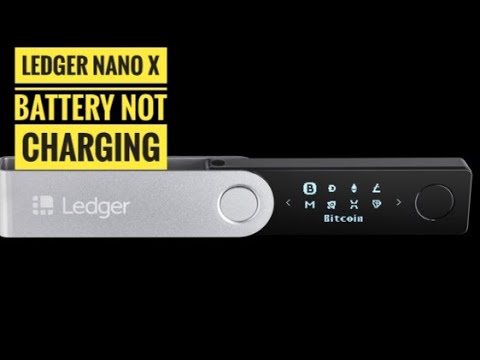
Troubleshooting Ledger Nano X Battery and Hardware Updates
Managing firmware stability, charging diagnostics, and thermal protection is critical during any ledger live nano x update process. This guide explains advanced ledger live app troubleshooting procedures for Ledger Nano X, Ledger Nano S, and Ledger Flex devices, including battery conditioning logic, secure firmware verification, and hardware protection mechanisms integrated into the ledger live hardware wallet ecosystem.
Modern Ledger devices continuously monitor voltage, charging cycles, thermal thresholds, and cryptographic firmware integrity through Ledger Live desktop services. During a ledger nano x live desktop synchronization, firmware telemetry and battery-state logic communicate directly with secure validation infrastructure to prevent unsafe charging conditions or corrupted firmware installations.
Diagnostic Protocols for E1 Charging Stopped & Temperature Faults
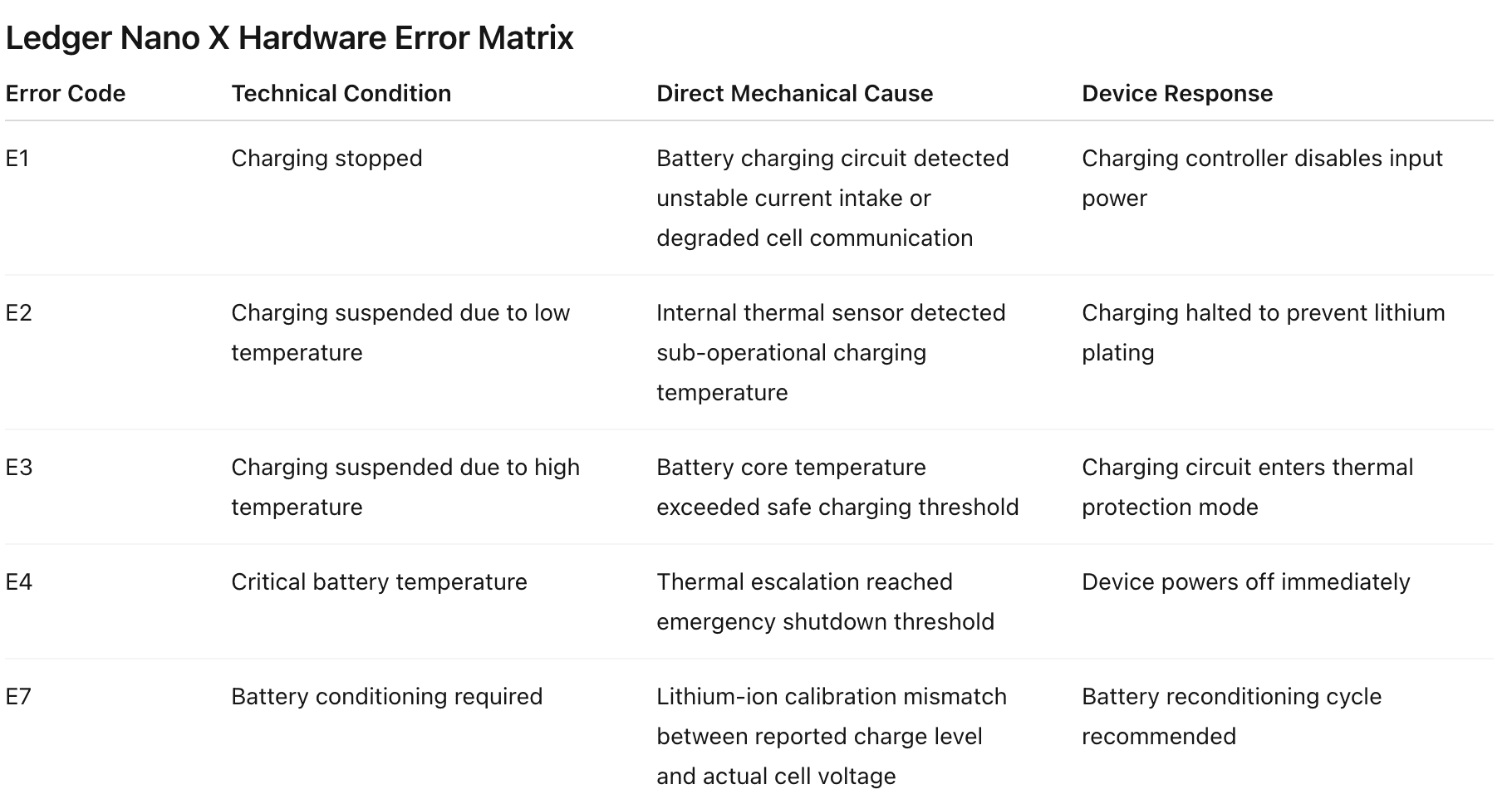
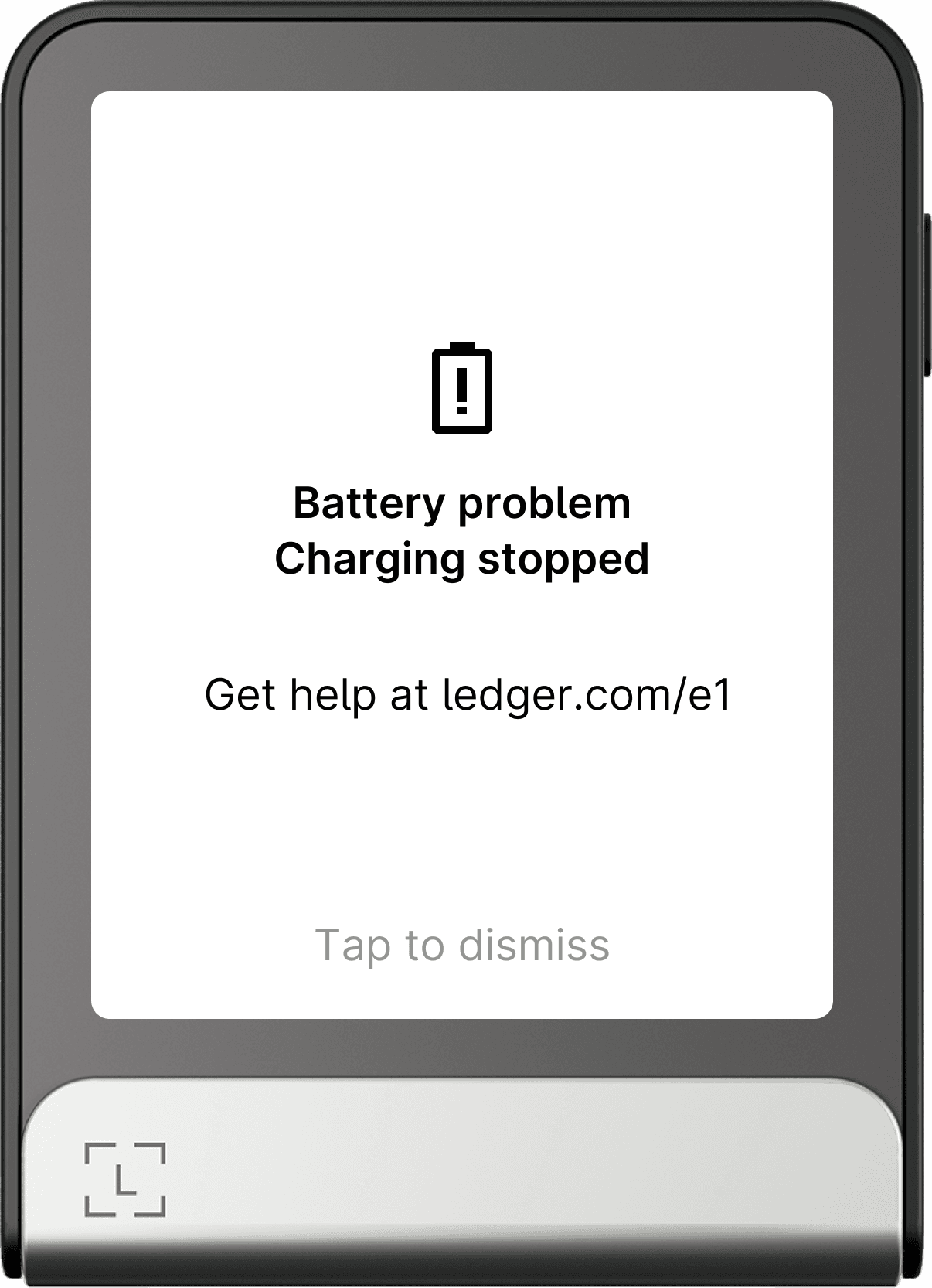
The E1 charging stopped condition is triggered when the device power-management controller detects unstable USB voltage delivery, irregular amperage negotiation, or degraded lithium-ion behavior. During ledger live app troubleshooting sessions, users commonly encounter E1 after using unsupported charging adapters, low-quality USB cables, or passive USB hubs.
Ledger Nano X devices contain embedded thermal monitoring systems linked directly to battery-protection firmware. These systems continuously evaluate:
Surface battery temperature
Internal charging current
USB voltage stability
Charge retention patterns
Firmware integrity validation status
When temperatures fall below safe operational charging ranges, E2 protection activates automatically. Lithium-ion batteries cannot safely absorb charging current under extreme cold conditions because metallic lithium plating may occur internally. To prevent permanent chemical degradation, charging is suspended until thermal normalization occurs.
E3 protection operates inversely. If thermal sensors detect excessive charging heat, the charging controller immediately cuts incoming current. High ambient temperatures, prolonged firmware installations, or direct sunlight exposure commonly trigger E3 conditions during ledger live nano x update procedures.
E4 represents the highest-level thermal emergency state. Once internal battery thresholds exceed safe engineering tolerances, the device initiates a controlled shutdown to isolate battery circuitry. This prevents accelerated lithium-ion expansion, voltage instability, or permanent cell damage.
Recommended diagnostic sequence:
Disconnect all third-party charging accessories.
Connect directly to a certified USB port.
Allow the device to stabilize at room temperature for 20–30 minutes.
Restart Ledger Live desktop services.
Reattempt firmware synchronization.
Verify firmware signatures through Ledger Live secure validation channels.
For persistent E1 faults, battery aging or charging-controller degradation may require hardware replacement assessment.
Conditioning Your Lithium-Ion Battery and Ledger Flex Updates
E7 battery conditioning mode is not a hardware failure. It is a calibration recovery process used to realign the reported battery percentage with the actual lithium-ion voltage curve inside the device.
During extended inactivity or irregular charging habits, voltage reporting drift may occur. Ledger Nano X firmware automatically enters conditioning mode to recalibrate:
Full-charge reference points
Low-voltage thresholds
Discharge slope interpretation
Battery percentage estimation logic
The recommended conditioning cycle includes:
Allowing the battery to discharge naturally
Performing one uninterrupted full recharge
Avoiding repeated short charging bursts
Maintaining moderate thermal conditions
Ledger Flex devices use an updated battery-management architecture compared to legacy ledger live nano s and Nano X hardware. While Ledger Nano S primarily depends on direct USB power without long-duration internal battery reliance, Ledger Flex integrates enhanced thermal balancing and adaptive charging management for prolonged operational consistency.
Ledger Flex firmware additionally improves:
Battery temperature balancing
Charge-cycle optimization
Voltage prediction accuracy
Firmware rollback protection
Secure Element power distribution efficiency
During ledger live nano x update operations or Ledger Flex firmware deployments, users should avoid disconnecting the device until cryptographic verification completes successfully.
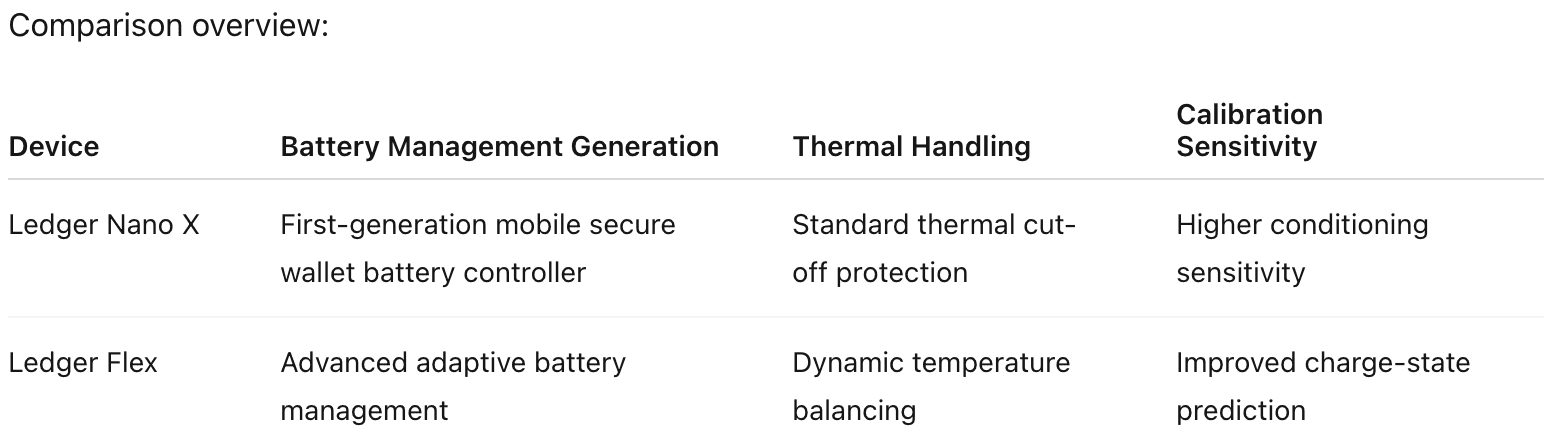
Users transitioning from ledger live nano s devices to Ledger Flex or Nano X hardware should understand that Nano S models operate without internal rechargeable battery dependencies, resulting in fewer thermal and charging diagnostics during firmware operations.
Global Infrastructure & Server Node Support
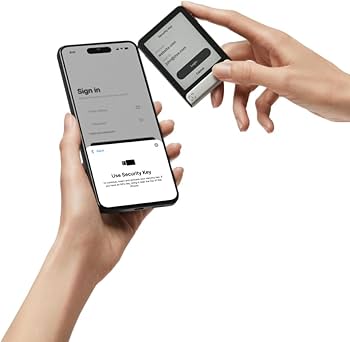
Ledger firmware verification operates through geographically distributed cryptographic validation infrastructure. When Ledger Live initiates firmware authentication, secure queries are transmitted through encrypted international clusters responsible for validating firmware signatures, Secure Element authenticity, and update integrity.
The ledger nano x live desktop environment communicates with secure infrastructure layers optimized for regional routing efficiency and reduced verification latency. These secure validation endpoints include international relay optimization across multiple jurisdictions including:
Russia regional routing clusters optimized through .ru network acceleration paths
Germany-based validation infrastructure utilizing .de enterprise-grade cryptographic relay systems
Thailand regional synchronization nodes optimized for .th low-latency firmware verification requests
Each validation cycle uses encrypted signature comparison against Ledger-authorized firmware manifests. Firmware packages are cryptographically authenticated before installation using integrity verification mechanisms tied directly to Secure Element architecture.
Security layers include:
End-to-end encrypted update transport
Anti-tamper firmware hashing
Secure Element certificate verification
Distributed validation redundancy
Regional failover synchronization clusters
If Ledger Live detects incomplete signature verification, firmware installation is halted immediately to protect the ledger live hardware wallet from unauthorized or corrupted firmware deployment.
Conclusion :
Battery protection systems, thermal monitoring controls, and cryptographic firmware validation are essential components of the Ledger ecosystem. Whether performing a ledger live nano x update, troubleshooting ledger live app synchronization issues, or managing Ledger Flex firmware deployments, maintaining proper charging conditions and verified update pathways ensures long-term operational security. Following official diagnostic procedures helps preserve the integrity, stability, and safety of every ledger live hardware wallet device.

Verified Insight by Global Blockchain Support Team. Technical documentation updated live for 2026 client architecture.
Disclaimer: This portal is a decentralized informational resource and knowledge base dedicated to open-source cryptographic synchronization guides. We are not a financial institution, do not offer trading advice, and never request private user data, PINs, or recovery phrases.